The agricultural sector is witnessing a remarkable transformation as farmers around the world increasingly embrace no-till farming as a cornerstone of modern crop production. This innovative approach, which refrains from disturbing the soil through traditional plowing, offers a multitude of environmental and economic advantages. By preserving the natural structure of the earth, no-till systems promote healthier soil ecosystems, enhance water retention and reduce the carbon footprint of global agriculture. In this article, we explore the mechanics of no-till practices, their environmental benefits, the factors driving worldwide adoption and the future prospects for sustainable farming on a global scale.
Understanding No-Till Farming
No-till farming, sometimes referred to as zero-tillage or direct seeding, is a conservation agriculture method that eliminates the need for conventional plowing. Instead, seeds are directly placed into undisturbed soil with specialized equipment. This ensures minimal soil disturbance while preserving organic matter on the surface. Farmers often combine no-till practices with strategic crop rotations and cover crops to further boost soil health and control pests naturally.
Key Principles
- Soil Health: Maintaining intact soil profiles rich in organic matter and microbial life.
- Residue Retention: Leaving crop residues on the field to protect the surface and foster nutrient cycling.
- Crop Diversity: Implementing varied rotations to break pest cycles and improve nutrient balance.
- Minimal Chemical Inputs: Relying on integrated pest management to reduce reliance on synthetic agrochemicals.
The adoption of no-till transforms traditional tillage-focused systems into dynamic agroecosystems that emulate natural ecological processes. Farmers who transition to no-till notice immediate improvements in water infiltration and a decrease in erosion rates, setting the stage for long-term productivity gains.
Environmental Advantages of No-Till Practices
One of the most compelling reasons for the global shift to no-till farming is its profound environmental impact. As concerns about climate change, soil degradation and biodiversity loss intensify, no-till emerges as a proven strategy to combat these challenges. Below, we outline the principal ecological benefits linked to no-till agriculture.
Enhanced Carbon Storage
Conventional plowing exposes soil organic carbon to the atmosphere, accelerating decomposition and releasing carbon dioxide. No-till systems sequester carbon in the soil, locking it into stable aggregates and organic matter layers. Over time, fields managed under no-till can become significant carbon sinks, lowering net greenhouse gas emissions from agricultural landscapes.
Improved Soil Health and Biodiversity
By preserving root networks and soil structure, no-till fosters a thriving belowground community of earthworms, bacteria and fungi. These organisms play critical roles in nutrient cycling, disease suppression and aggregate formation. A diverse soil food web contributes to plant vigor and resilience, reducing the need for external chemical inputs.
Reduced Erosion and Water Conservation
Surface residues in no-till fields act as a protective mulch, shielding topsoil from wind and water erosion. This natural barrier prevents nutrient loss, maintains field-level productivity and conserves moisture during dry spells. In regions prone to drought, no-till farming can cut irrigation needs by up to 30 percent, safeguarding water resources for future generations.
Habitat Preservation and Resilience
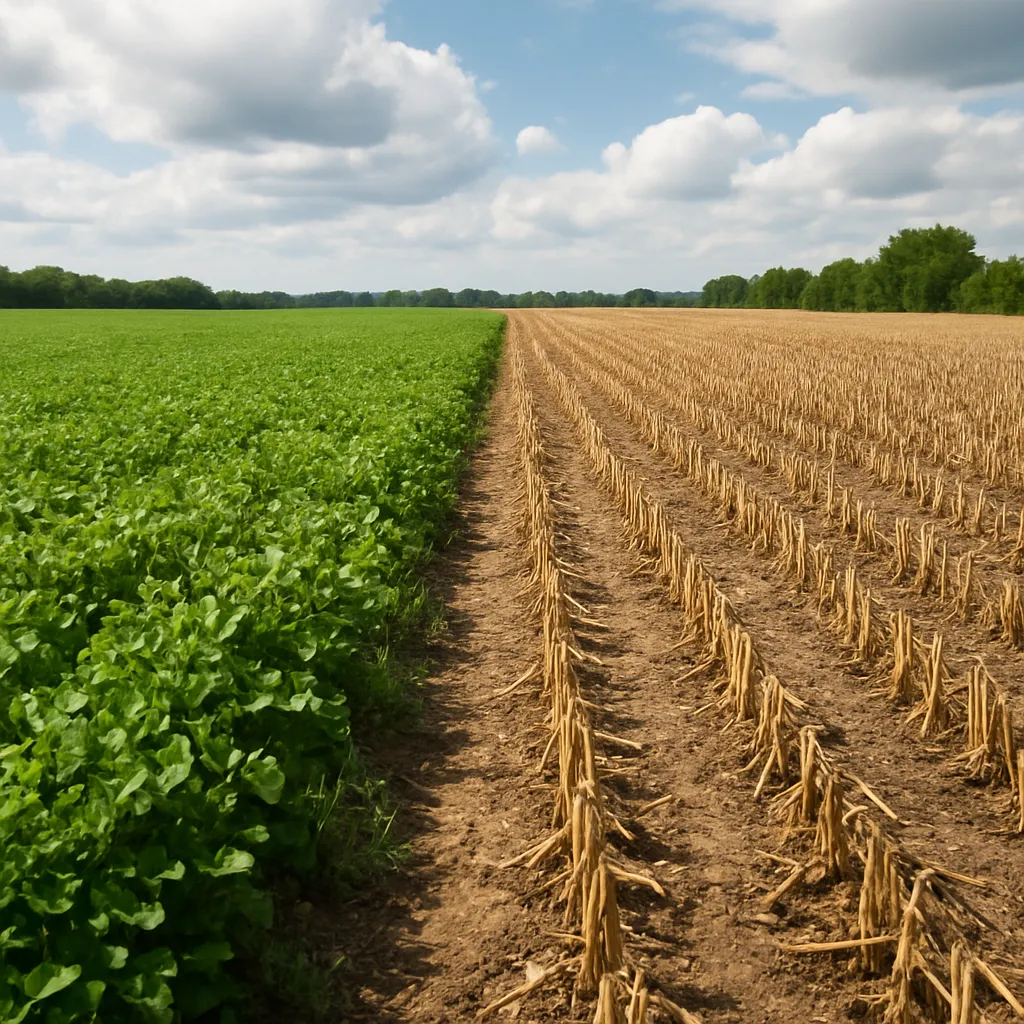
Retention of stubble and crop residues provides cover for wildlife, including birds and beneficial insects, enhancing on-farm biodiversity. By reducing mechanical disturbance, no-till fields become refuges for pollinators, predators of crop pests and other organisms that bolster ecosystem services. The increased resilience of both soil and wildlife communities helps farms adapt to extreme weather events.
Global Adoption Trends and Challenges
Across continents, farmers are reevaluating traditional tillage methods in favor of more sustainable approaches. The transition to no-till is driven by economic incentives, policy support and growing environmental awareness. Yet, the road to widespread adoption involves overcoming technical and social barriers.
Regional Success Stories
- North America: Large-scale corn and soybean producers have reported yield stability and cost savings after adopting no-till across millions of hectares.
- South America: Brazilian farmers cultivate vast expanses of no-till soybean, leveraging residue management to maintain soil fertility and reduce fuel expenses.
- Africa: Pilot projects in the Sahel demonstrate that no-till with cover crops can rehabilitate degraded lands and boost food security in semi-arid regions.
- Asia-Pacific: Rice–wheat systems in South Asia are experimenting with zero-tillage seed drills to cut labor demands and curb greenhouse gas emissions from paddy fields.
Barriers to Widespread Implementation
Despite clear advantages, several factors impede rapid uptake of no-till:
- Equipment Costs: Specialized drills and seeders require upfront investment that can be prohibitive for smallholder farms.
- Knowledge Gaps: Effective no-till requires new agronomic skills, such as residue management and precise herbicide use.
- Weed Management: Without regular tillage, weed pressure can rise initially, necessitating careful integrated pest strategies.
- Market Incentives: Lack of immediate price premiums for sustainably grown crops can slow adoption among profit-driven producers.
To address these challenges, governments, NGOs and private sector partners are collaborating to provide training, financial incentives and access to conservation-grade equipment. Farmer-to-farmer networks and extension services play a pivotal role in disseminating best practices and sharing lessons learned.
Future Prospects and Innovations
The evolution of no-till farming continues with technological and scientific breakthroughs aimed at enhancing efficiency and sustainability. From precision agriculture tools to novel biological inputs, the innovation landscape promises to refine no-till systems further.
Precision Agriculture and Data Analytics
Drones, satellite imagery and soil sensors enable farmers to monitor nutrient levels, moisture content and pest outbreaks in real time. By integrating these data streams, producers can apply variable-rate seeding, fertilization and pest control — maximizing yields while minimizing environmental impact.
Biological Solutions
Advances in microbiome research have led to the development of microbial inoculants that boost nutrient availability and disease resistance. Coupled with no-till practices, these bio-based amendments enhance resilience and reduce dependence on synthetic fertilizers and pesticides.
Policy and Market Mechanisms
Emerging carbon credit schemes and ecosystem service markets incentivize farmers to adopt no-till methodologies by compensating them for environmental stewardship. Certification programs focusing on sustainable sourcing provide consumers with transparency, driving demand for crops grown under conservation agriculture standards.
As global food systems confront the dual pressures of feeding a growing population and preserving planetary health, no-till farming stands out as a scalable solution. By leveraging the synergy of soil science, technology and collaborative policy frameworks, the world’s farms can transition toward more sustainable, productive and climate-smart models of agriculture.